
Introduction: Islam's Hidden Origins
Western anthropologists when describing the esoteric elements honored within the West African Vodoun religion, have consistently referred to its presence as being an amalgamation or a syncretism of Hindu, Buddhist, Christian and Muslim elements. Their only explanation in justifying the African Vodounsis' “fascination” in incorporating these “borrowed foreign” religious elements, is their need to “modernize,” or to make relevant the Vodoun religion as it is practiced today.
Centuries of undermining the African spiritual intellect, compounded by Western historians’ disregard of Africa’s more ancient history reflecting her cultural and religious influences on the ancient world for thousands of years, is largely responsible for the perpetuation of this myth.
What western scholars and others have failed (or refuse) to realize, is the enormous importance and divine power of Africa’s Ancestors in maintaining the continuity of their spiritual lineages throughout antiquity. By doing so, what is actually being revealed within this “conceptual hodgepodge” in the West African Vodoun, is not evidence of syncretism at all, but rather an historical road map and Ancestral timeline of the Africans' central presence in the evolution and the shaping of these major spiritual systems throughout the development of human civilizations since time immemorial.
The West African Vodounsis’ Ancestors were not “converts” into these “major” religious systems, but were indeed ancestrally affiliated through their neolithic clans who were the founders of what were originally complex ascetic spiritual systems, now diluted and diminished to revised theological dogma and ethnic rivalry; and the spoils of its sacred origins being credited to Africa’s recent conquerors.
The West African Vodoun religion is but one of many spiritual ancestral systems extant in Africa that still possess the esoteric knowledge, ritual mastery and ancient history maintained through their deities, elders, sacred songs and traditional dances that helped form the ecclesiastical and theological genesis of these major “foreign” religions of which they have been often marginalized or mistaken as recent “converts” by western historians.
The Mama Tchamba Ancestral spiritual system is one of the major and most important esoteric systems, whose history of maintaining family and spiritual lineage continuity dates back to Neolithic times. One of its most ancient lineage sub-branches in the African family tree is Muslim, that pre-dates Mohammedan Islam.
Islam Before Muhammad: The African Mama Tchamba Roots of Islam
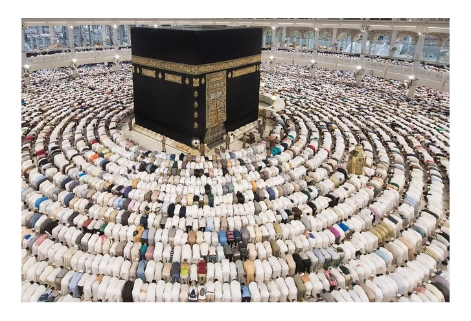
Above: Devout Muslims' annual pilgrimage to the Holy city of Mecca in Saudi Arabia. Muslim tradition attributes the beginning of Islam to Ishmael's descendants in the 7th century. However, the Islamic presence of Islam in the Mama Tchamba Vodoun predates Mohammed's arrival by hundreds (if not thousands) of years.
Though modern Muslims credit Mohammed with the installation of the Holy Ka’aba, the historical record is clear that the Holy Ka’aba, was established for hundreds (perhaps even thousands) of years by the Fulani and other African matriarchal clans long before Mohammed’s existence. The black stone originally featured two black oracle doves of Aphrodite, (Messengers of the Moon Goddess), and a mermaid representation of the Mami Wata deity Al-Uzzah or “Ali-lat” as she was revered and worshiped by the African Phoenicians/ (Canaanites). She was also worshiped by the “white Arabs” as Aphrodite (the “giver of children and romance”) in her generative form.
Fulani Vodounsi in possession with Mama Tchamba Al-Uzza (Awussa), the ancient Islamic deity of her founding ancestors. Those Fulani Islamic sects and other African clans who either were enslaved or captured and sold slaves, must make divine compensation by serving the Mama Tchamba. In doing so, those enslaved ancestors and their descendants are healed and the enslavers' families are blessed and relieved of the divine retributional yoke they suffer under the offended spirits of the ancestors who were enslaved. Togo, West Africa, 2009.
© 2010 Mama Zogbé.
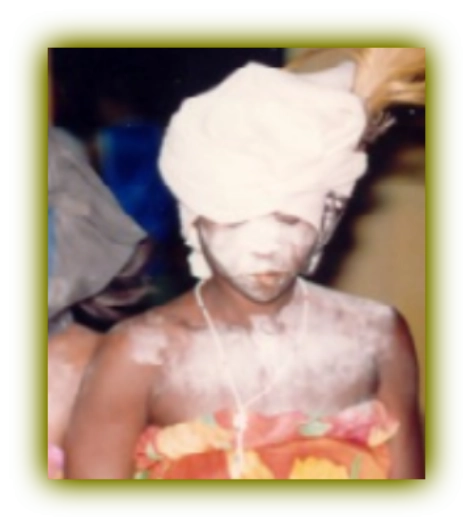
Above Right: Vodounsi in possession by Mama Tchamba Al-uzza.
For more than 2000+ years before Mohammad, Islam was founded, developed and practiced in Africa by the Fulani, Abyssinian, other Sudanic and East African matriarchal clans. Many of the sacred songs to their chief warrior Vodoun deities are ancient Islamic prayers against the Arabic invaders. Mami Al-uzza (Awussa) was the chief goddess, along with 360+ African ancestral deities who originally occupied the sacred Ka'aba built by them; until they were conquered by the Arabic warrior clans around the 6th century. Under Mohammed's revisions, their founding ancestral deities and Al-uzza were first reduced to "Jinns" (lesser angels) and later booted out completely. It was forbidden under penalty of death for Mohammed's new converts to worship or pay homage to them again. During this same period, revisionist versions of Judaism, the emerging Christian cults and Mohammed's version of Islam was being forced upon the African and Asian world by the sword. In one out of hundreds of these accounts, the Qur'an [Surat al-Buruj 85:4] documents that in 523 (C.E.), Ethiopian King Yousef Athar Dhu Nawas, originally an initiate of Al-uzza, was forced to pile more than 10,000 matriarchs and their clans into a mass Ukhdud (pit) and ordered it set ablaze, because they had refused to convert to any of these emerging competing doctrines. During their scramble to conquer Africa, all of these emerging patriarchal sects clashed, vying for expansion. All competing for her land, wealth through African enslavement and her mineral spoils. A great number of West Africans enslaved in the New World descend from these original African Islamic ancestral clans, where their founding ancestors and ancient deities are still born to them. Today, just as during ancient times, Mama Tchamba still plays a central and critical role in the West African Vodoun spiritual systems.
Mama Tchamba and Pre-Mohammedan Islam in Perspective
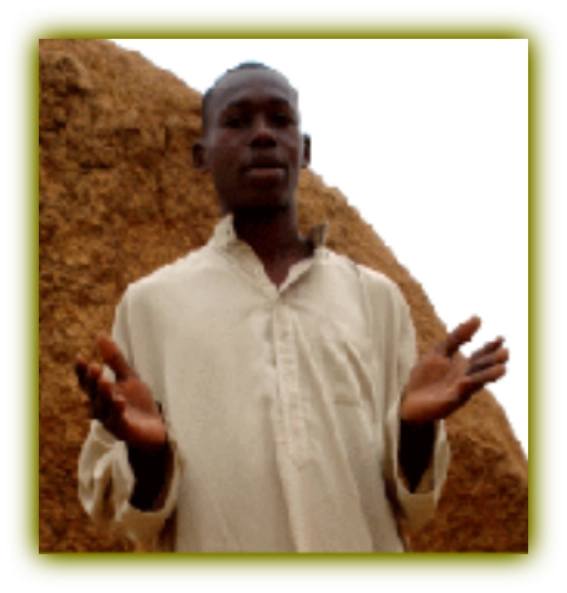
Togolese Vodoun priest attired in the traditional Muslim Adeel Galabiyya, praying to the Fulani Islamic Line of his Mama Tchamba ancestors. His principal Mami Wata deity is Al-uzza, (Awussa), the major founding Goddess of Islam before her usurpation around the 6th century by the warrior Arabic clans led by Mohammed. There are four major African ancestral branches of Mama Tchamba which encompasses the ancestral root of all of Africa. The Islamic ancestral branch is one of them.
During pre-Mohammedan Islam, Al-Uzzah ("the almighty and morning star") was one of a triune (holy trinity). The other two were Ali-at and Kore. These were the principal deities representing the tribes of the original African Muslims. For example, the Kores (Korites) of East and Central Africa are the ancestral clan of Ibrahim (Abraham), who were also worshipers of Mama Tchamba Al-Uzzah.
The shrines of this holy triune were located between Al Talf and Mecca. The other African goddess, Ma-Anat, (goddess of destiny) shrines were located along the road between Mecca and Medina. In some locations, Ali-at was the chief deity along with her consort Hu-bal/Hubul, who was also associated with the moon.
We learn from Herodotus, Forbenius and Diodorus that the worship of Hu-bal, Ali-at and Al-Uzza (Awussa), was well established long before Mohammed's time. The half crescent moon and star were their celestial representation centuries before Mohammed was born. The fact that the masculine Hu-bal was associated with the moon is clear evidence of the antiquity of this particular tradition. This was so because, astrologically all of the major Mami deities during ancient times were worshipped as both sun and moon.
Many of the followers of Al-Uzza were an ascetic, highly spiritual group of matrilineal nomads and traders. Each clan was headed by a queen priestess, and a temple haram (harem) of priestesses and sadhus (ascetic priests). Many of the Abyssinian clans wore their hair in long locs, did not touch the dead, nor did they attend funerals (even of relatives). They were meticulous about their worship, hygiene, morals and taboos. They spoke and wrote in Aramaic, Mande, Fulbe and Houssa (Hausa), the primary ancestral language.
The sacred ceremonies of the Muslim Hajj also predates Mohammed. They were long established by Al-Uzzah long before Mohammed ever existed. This includes the annual pilgrimages of Ka'aba, the fast of Ramadan, the shaving of heads, animal sacrifices, praying several times a day, the giving of alms, Friday's prayers, ritual bathing, ablutions, taboos against incest, the "throwing of stones" in Wady Mina (sacred mountain). Additionally, the time honored tradition of hanging sacred versions of the Ka'aba from the Saba.
Additionally, many of the moral tenets established in the Qu'ran (originally the book of Kore) were already written and in practice centuries before Mohammed. The traditional Islamic attire was hand woven and worn by these African Islamic groups as well. This irrefutable fact has been well known and admitted by only a few honest scholars. Famous ethnologist and archaeologist Leo Frobenius (1873-1938) tells us that:
"Wherever Islamism exists in the Soudan it is underpinned by older civilizations, the height of which must not be undervalued... the Sudanese [superior] dress is pre-Islamic, [and] they had prayers... and their gestures cannot be other than inherited from a immemorial past, since the heathen tribes in the remotest districts have them too... I would even go so far as to maintain that the Islamist got his clothing from [none other] than the Negro (p. 359) "The Voice of Africa" (New York: Benjamin Bloom, Inc., 1968, Vol. II)
However, it was under Mohammed's orders that the African Al-Uzza, and their 360+ ancestral deities were removed from the holy Ka'aba and reconstructed. The Holy Koran that once ordered that Al-Uzza and the other African deities be worshiped (Surah 53:19-20) had been modified in the new book, or eliminated altogether. Mohammed later ordered that the Ka'aba be erected into the corner instead of the original center. It is for that reason that in the holy system of divination, Afa, the sacred 13th star (odu), Tula Medzi under which the Muslim's great royal ancestors descended from heaven unto the Earth before any Arab was born, they decried against what they viewed as a crime of desecration and sacrilege by Mohammed and his followers.
The historical evidence also makes clear that it was not Mohammed who "converted" the North and Central African to Islam. By the time Mohammed arrived on the scene in 622 C.E, many of these African clans- principally the Abyssinian, Mandes, Fulbes, Moroccans, and Songhai- had largely abandoned their matriarchal customs and had fully converted and established the "new" patriarchal Islam in North Africa. Many of the harams (Mami temples) were destroyed and replaced with Allah as the sole god. In fact, according to Forbenius, Mohammed never made it past the Sudan. It might be concluded that the usurpation of the culture and tradition of Islam, once an ancient matriarchal spiritual system, was probably the result of an internal struggle strongly influenced by the revised and politicized Judaic, Christian and Islamic patriarchal religious cults sweeping across Africa and the ancient world. It is these faiths exclusive predominance which has reigned and their historical version has not been seriously challenged until the present. Those Africans who resisted either committed suicide, were murdered or were sold into slavery by the Fulani, Berber and other African converts to the "new" Islam. The Fulani and other groups of the new Islam were very active and prosperous in the slave trade. It helped finance their many invasions as they made their way through Central and West Africa, forcing converts to the new Islam. Many Africans sold into the New World were Muslim descendants of the older pre-Islamic orders which has virtually been written or obscured from "modern" history.
In 930 CE, after the death of Mohammed, a power struggle for regional hegemony between the Fatimids (his ruling party) and the competing Qamartians (a sect of Shi'ite Ismailis) ensued. The latter attacked Mecca and took the sacred Ka'aba stone and smashed it into several pieces, transporting it back to their Capital al-Ahsa in eastern, Saudi Arabia. The sacred rock was eventually retrieved and patched together with silver wire. Today, millions of Africans and other devotees flock to view, kiss and worship the sacred black stone as they have done for thousands of years, believing it to have always represented their "Allah". However, the original holy spirit which is Mama Tchamba & Al-Uzzah have long ago departed with the remnants of her clans scattered throughout West and Central (southern Sudan, Niger) African and in the New World.
Before Mohammed: The African Mother Root
The statues of the [Ethiopian] patriarchs were in the temple at Mecca when Mohamed commenced his 'reform'. The [black] dove was also worshipped along with them. Against this, Mohamed in a very particular manner, made war. With the assistance of Ali he himself destroyed the dove, the emblem of the female generative power.
Godfrey Higgins, Anacalypsis, pg. 424
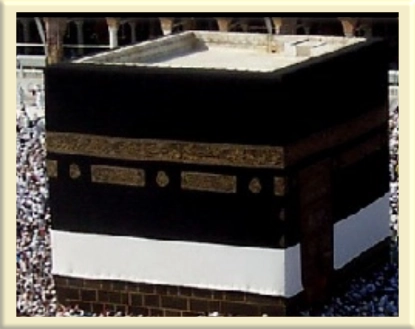
Listen carefully to the account of Vice TV founder, Suroosh Alvi, a Muslim, during his first Hajj pilgrimage to Mecca. He recounts the history of the Holy Ka'aba. Although his timeline is off, he clearly states that the Ka'aba was already in existence and occupied by "pagans" when it was usurped by Mohammed
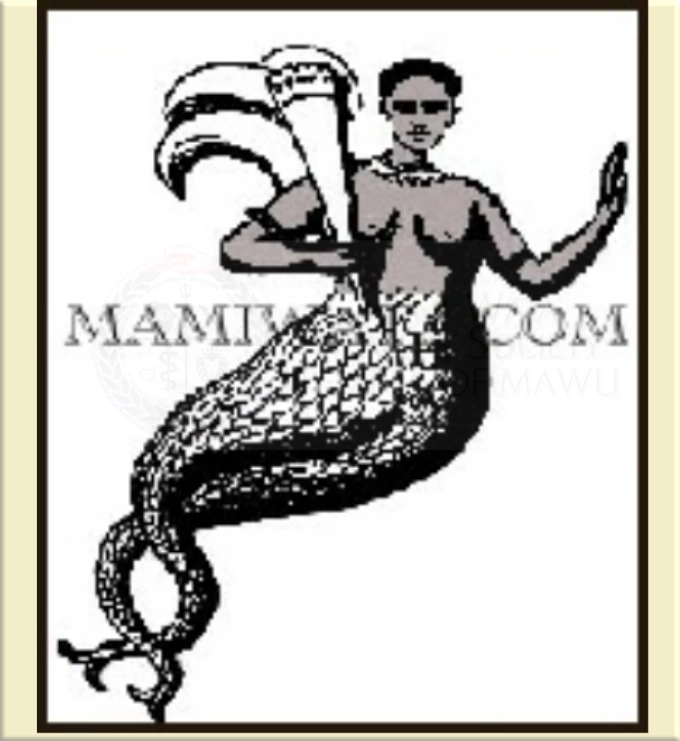
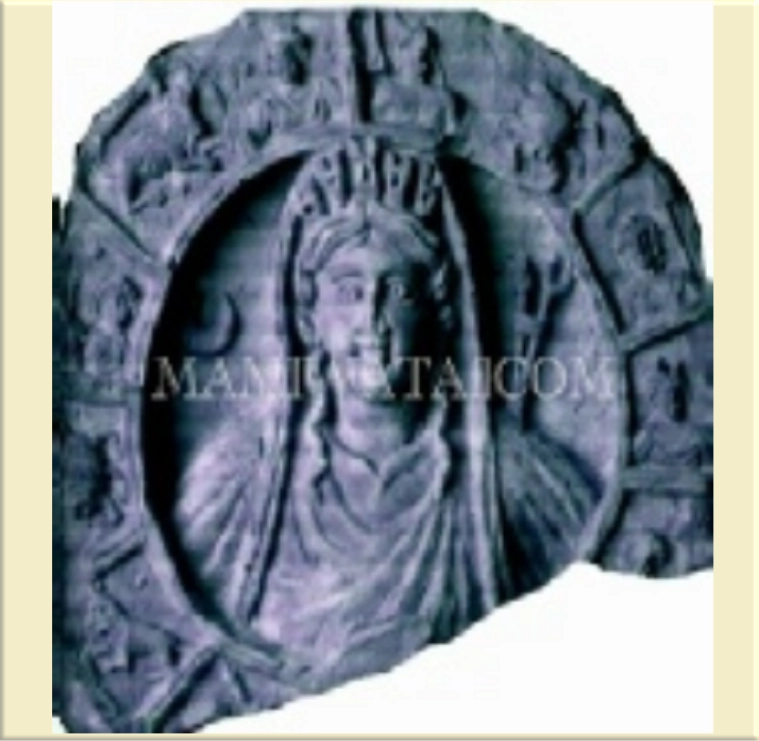
For thousands of years before Mohammed, it was Ali-at and Al-Uzzah who were the chief African deities symbolized at the Holy Ka'aba (originally Temple of the Moon-goddess) built by the African Hausa, Fulani, Mandes and other clans who settled into ancient Medina around 4000 BC.
The Ka'aba stone was a holy black, granite omphae with a black dove nestled atop, whom devotees believed had 'fallen from the heavens or the sky'. All major Mami deities were originally worshiped as black stones, an ancient tradition which is still extant today during annual ancestral celebrations in Togo, West Africa, where many of the descendants of these groups later settled. Only holy men/devotees are allowed to enter the sacred forest to capture this sacred stone.
It was these African "pagan" clans under Al-Uzzah who developed the sacred system of Urdu-Arabic Script, Sand Divination, annual pilgrimages, the fast of Ramadan, the shaving of heads, animal sacrifices, praying several times a day, the giving of alms, Friday prayers, ritual bathing, ablutions, taboos against incest, the "throwing of stones" in Wady Mina (sacred mountain), belly dancing, Henna-Mehandi hand painting; the time honored tradition of hanging sacred verses upon the Ka'aba from the Saba, etc. All African cultural traditions now credited to the Arabs, India and Asia.
However, it was under Mohammed's orders that the African Al-Uzza, and their 360+ "pagan" ancestral deities were removed from the holy Ka'aba and reconstructed. The Holy Koran that once ordered that Al-Uzza and the other African deities be worshiped (Surah 53:19-20) had been modified in the new book, or eliminated altogether.
Many peoples around the world, including the African-American Diaspora are ancestrally linked to the indigenous Islam of Al-Uzzah. The remnants which remain continue to be heavily suppressed by the Arabs in the Sudan and elsewhere. In the Vodoun tradition, Al-Uzza remains a chief Mami deity, and the Mama Tchamba are the divine personification of these ancient clans as well as the ancestral spirits of enslaved Africans and their descendants. Slavery is viewed as a historical continuum triggered by the decline of African hegemony, rooted in their experiences more than 2000 years ago.
Sacred Ekpe (stone) Ceremony: Togo, West Africa
In pre-Mohammedan Islam, Ali-at and Al-Uzzah were first installed and worshiped in the Ka’aba (‘originally Temple of the Moon-goddess’). They were historically symbolized by the holy black, granite stone. In Africa and throughout her ancient colonies where she was worshiped from Greece, Palestine, Jordan, Israel, Turkey, Southern Iran and Iraq etc., all the major Mami deities in their feminine form were originally worshiped as black stones. These sacred stones were reputed to have “fallen from the heavens.” They are described as square black meteorites, or granites to the much sought after “perssinuncian stones” (thunderstones).
In Togo, West Africa this ancient ceremony is still in practice during their annual ancestral celebrations (see article). As during ancient times, a group of male priests of the Thunder deity, “Heviosso” are sent into the sacred Bé forest to capture the sacred Epe-Ekpe (stone) that has “fallen from the heavens.” The crowd becomes electrified, anxious to veiw the holy obejct. Depending on its color, it can forecast either good (white) or (black) misfortune for the community. Although the male devotees are the ones to retrieve the stone, it is the queen mother who must view the stone and whose cheers alerts the village that its portents are good or bad.