Translate this page:
You can translate the content of this page by selecting a language in the select box.
Share this link!
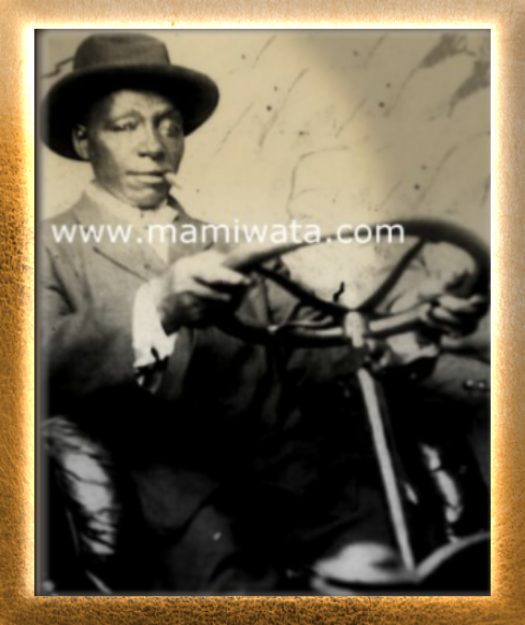
"Paw use to take us across this small bridge that he'd built. For years, we'd track on across that bridge, and never thought nothing of it.
It was not until later that we realized that it wasn't no bridge at all; but a great-big-ole-serpent!
You see, in those days, before the White man started clubbing and shooting them to death, they [the serpents] used to grow that big!"
Mama Zogbé's family lore about "Paw" passed down from great-grandmother. Paris, Louisiana
African descendants in the New World owe much to Haiti, an independent, proud republic since 1804. As a result of their victory, Haitian Vodou, having its ancestral roots in many West African indigenous religions, is the most widely known African religion to have survived and flourished in the New World.
However, though always miscredited by western historians and New Age converts, Haiti is not where the Vodoun religion was born, nor is it where it reached its highest pinnacle of philosophical, ritual and theological development.
African descendants in the New World owe much to Haiti, an independent, proud republic since 1804. As a result of their victory, Haitian Vodou, having its ancestral roots in many West African indigenous religions, is the most widely known African religion to have survived and flourished in the New World.
However, though always miscredited by western historians and New Age converts, Haiti is not where the Vodoun religion was born, nor is it where it reached its highest pinnacle of philosophical, ritual and theological development.
The Vodoun religion is estimated to have existed for more than 10,000+ years, having its ancient roots in Egypt, East Africa and in ancient Afro-matrilineal Ionia (later known as "Greece") where the African, Queen mothers established their powerful temples and theocratic empires long before the Dorian Greek invasions. The Vodoun religion was also one of the major religions practiced all throughout the ancient world.
Additionally, in more recent times, what is not widely known nor extensively researched is Vodoun's history in America, more specifically, among the Ewe and other West African groups enslaved in America who brought the Vodoun religion directly from West Africa. It had been assumed because the Africans enslaved in America were not as numerous as those in Brazil or the Islands, that somehow their family spiritual lineages died out when the religions were violently suppressed.
It is widely acknowledged that the Vodoun religion is largely the result of the importation of Africans mainly from the West African Kingdom of Dahomey, (present day Benin to include Togo). Namely from the Ewe [ev-way] and Fon groups. The Ewe are the major group1 (the Fon, Mina, Adja, are subgroups) who reside primarily in Togo, southern Benin, southeast Ghana, and scattered all throughout West Africa, were brought to America's shores in the early 1800's via Louisiana.
With them came the Vodou religion which underwent the same religious persecution as the Congo and Yoruba groups, forcing it underground as it had existed until recently. Many priests and priestess [especially those who were prosperous] were murdered and forced off of their lands2. Many born to serve their divinities and ancestors found other discreet ways to manifest their spirits.3 Many out of fear simply "forgot,"- triggering future generations on their own ancestral quest to seek out its spiritual source.
Papaws or Popos
[The] "Papaws or Popos were the largest group of Africans exported and enslaved [in America] in the early eighteenth century.
They were speakers of Ewe and in this language there is a word dzon'ku' a sorcerer's name for himself and the world “nu” meaning man.
Put together, the words mean a sorcerer man or witch-doctor."
Irene Smalls
The Johnkankus: Roots of An African American Christmas
The Vodou religion is estimated to be as old as 10,000 years, and is the official religion of Benin where thousands flock to her shores from surrounding nations to attend its annual festivals, and partake of its ancient rituals and ceremonies.
Contrary to popular belief, Vodou is not a monolithic religion. Though the official religion of Benin it is not the only country where Vodou is practiced. Many nations and regions throughout Togo, Ghana, Senegal, the Ivory Coast, Burkina Faso, Cameroon, Nigeria and other West African nations practice different variations of the Vodou, that is ethnically, culturally, linguistically and ancestrally distinct and indigenous to their own group. They are not imports from Benin.
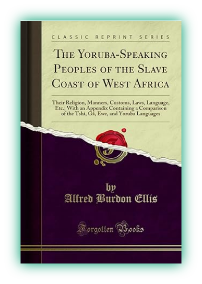
Indeed, folk magic that is known in the Americas as Hoodoo, contrary to what is being promoted as an exclusively Congo import, also was a fully developed tradition in Dahomey, and was also brought over to the Americas on the slave ships by the Ewe groups. As the magic and beliefs of the common people, consider the quote below, extracted from an 1890 expedition by A.B. Ellis of the "Slave Coast". During his visit in Togo, Ellis observed and commented:
Amulets, Omens and Various Superstitions Among the Ewe
"Since the name even of a person, should fall into bad hands, may be used to the detriment of the bearer, of course anything that has belonged to a man, especially anything that has formed part of or has come out of his saliva, or the feces, can be used for a similar purpose.
Some nail-parings that belonged to a man recall that man to the mind of the native; and the subjective connection, which was terminated when those parings were cut, is still also unbroken; and that anything that is done to them will be felt by the body to which they belongs. Hence, it is usual for pieces of hair and nails to be carefully buried or burned, in order that they may not fall into the hands of sorcerers; and even the kings' saliva is carefully gathered up and hidden or buried."
Magic powders are very numerous. One kind when blown against a door or window, causes it to fly open, no matter how securely it may be fastened; another, when thrown upon the footprints of an enemy, makes him mad; a third, used in the same day, neutralizes the evil effects of the second; and a fourth destroys the sight of all who look upon it.
A.B. Ellis. “The Ewe-Speaking Peoples of The Slave Coast of West Africa” (1965 pg. 94:99).
History of Stagville, North Carolina
"The slaves who were brought to America, and whose descendants labored at Stagville,[North Carolina] were generally of West African origin. Slaves generally came from agrarian societies including the Ibo, Ewe . . . peoples, societies that were predominantly family-based socially, politically, and economically.
What exists here are simply a few historical anecdotal records of Ewe slaves and the recognition and validation of both their significant numbers enslaved in the U.S. during the early 1800's, and their contribution to the Vodou religion in the lineages of their descendants in America.
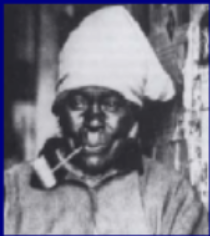
African Origins of Gullah People
Tuner's groundbreaking research in the thirties found words in the Gullah vocabulary from the following languages : . . . Wolof, Malinke, Mandinka, Bambara, Fula, Mende, Vai, Twi, Fante, Ga, Ewe, Fon, Yoruba, Bini, Hausa, Ibo, Ibibio, Efil, Kongo, Umbundu, and Kimbundu.
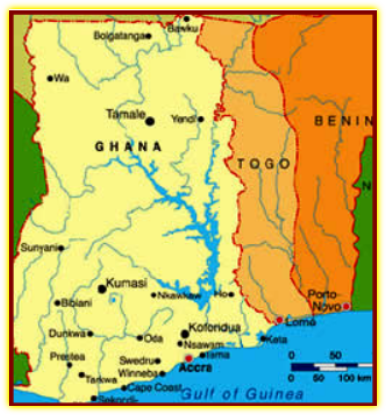
The Ewe are the major groups, and the Fon, Mina, Adja, others are subgroups. However, they all descend from a common ancestor in the "East," meaning the nation of Ketu, [now Benin of Nigeria] which they claim as their birth home. Ketu is known as Amedzofe or Mawufe to the Ewe and Fon and the Ga-Dangme ( the Ga-Dangme later to be known as Akhan).
Oral accounts tell of their existence in Ketu since the 11th century, long before the expansion of the Oyo empire. The Vodou religion existed in this region for well over 300 years. It was after the expansion of the Oyo empire when tension led to conflicts and the progressive migration of the Ewe, Fon and the Ga groups south.
The Ewe are the major groups, and the Fon, Mina, Adja, others are subgroups. However, they all descend from a common ancestor in the "East," meaning the nation of Ketu, [now Benin of Nigeria] which they claim as their birth home. Ketu is known as Amedzofe or Mawufe to the Ewe and Fon and the Ga-Dangme ( the Ga-Dangme later to be known as Akhan).
Oral accounts tell of their existence in Ketu since the 11th century, long before the expansion of the Oyo empire. The Vodou religion existed in this region for well over 300 years. It was after the expansion of the Oyo empire when tension led to conflicts and the progressive migration of the Ewe, Fon and the Ga groups south.
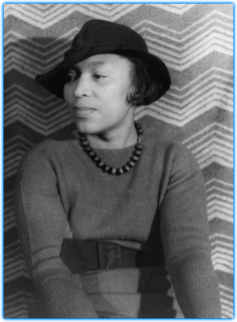
[The] "Ewe-speaking peoples [A West African nation from which many slaves came to America]* . . . all make offerings of food and drink--particularly libations of palm wine and banana beer upon the graves of the ancestor. It should be noted that in America that the spirit always give a pint of good whiskey. He is also frequently paid for his services in cash"
(*Footnote pg 234) Zora Neale Hurston: Of Mules & Men
The Johnkankus: Roots of An African American Christmas
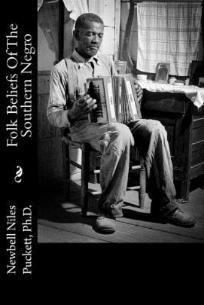
“Thousands of Negroes from these serpent worshiping tribes were at this time sold into slavery..... They bore with them their cult of the snake. At the same period these Ewe speaking slaves [emphasis mines] were taken to Louisiana."
Newbile Niles Puckett
The Magic and Folk Beliefs of the Southern Negro

"Da (dada)" - mother, nurse, or elder woman (Ewe)
The Water Brought Us by Muriel Miller Branch
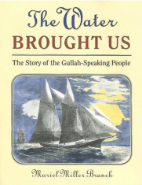
"Mama"- grandmother (Ewe)
Language Guide (Ewe version):
Bureau of Ghana Languages, Accra
The Ewes
The Ewes moved into the area which is now Togo from the Niger river valley between the 13th and 14th centuries.
During the 15th and 16th centuries, Portuguese explorers and traders visited the coast. For the next 200 years, the coastal region was a major raiding center for Europeans in search of slaves, earning Togo and the surrounding region the name "The Slave Coast."
U.S. Department of State, Bureau of African Affairs October 1997
Melrose's Story of Land and Slaves
On January 8, 1736, Francoise (a slave belonging to Chevalier Louis Juchereau de St. Denis) and Marie Francoise were married in Natchitoches, La. The only clues indicating the origins of this African couple are the names of four of their children: Dgimby, Choera, Yandon and Coincoin. These names can be attributed to the Ewe linguistic group of the Gold Coast-Dahomey region of Africa. The pronunciation of Coincoin is close to that of Ko-kwe, a name given to all second-born daughters by those who speak the Glidzi dialect of the Ewe language".
Landmarks: The Louisiana Metoyers:
Melrose's Story of Land and Slaves
Author: Mills, Elizabeth Shown. American Visions. June 2000. pg. 40-41
That the term vodu should survive in Hayti and Louisiana and not in the British West India islands, will surprise no one who is acquainted with the history of the slave trade.
The Tshi-speaking slaves, called Coromantees in the slave-dealer's jargon,was not admitted into the [Louisana] French or Spanish colonies.
. . . the [Louisnana] French and Spanish drew their chief supply from the Ewe-speaking slaves exported from whydah (Ouidah) and Badagry.
A.B. Ellis. The Ewe-Speaking Peoples of The Slave Coast of West Africa (1965 pg. 30).
1. Mama Zogbé (formerly: Mamaissii Vivian) Mami Wata: Africa's Ancient God/dess Unveiled. Mami Wata Healers Society.
2. Frederick Barth, Ethnic Groups and Boundaries. (Bergen, 1969).
3. John and Jean Comaroff, Ethnography and the Historical Imagination. (Boulder, Col., 1992).
4. John Thornton, Africa and Africans in the Making of the Atlantic World, 1400-1680.(Cambridge, 1992).
5. Joseph Harris, Global Dimensions of the African Diaspora, Washington, 2nd ed., 1993.
6. Colin Palmer, From Africa to the Americas: Ethnicity in the Early Black Communities of the Americas, Journal of World History, 6, 2, 1995, 223-36.
7. Stephan Palmie, Ethnogenetic Processes and Culture Transfer in Afro-American Populations, in Binder, ed., Slavery in the Americas, 337-63.
8. Richard Walser, His Worship the John Kuner North Carolina Folklore Journal 19 (1971) 160-172.
9. Zora Neale Hurston: Mules and Men. HarperCollins Publishers, Incorp. January 1992.
10. Bancroft, Frederic.Slave-Trading in the Old South. Baltimore, 1932.
11. Ajayi, Ade, J.F. & Espie , Ian, A Thousand Years of West African History, Great Britain, University of Ibadan, 1967.
12. Alapini Julien, Le Petit Dahomeen, Grammaire. Vocabulaire, Lexique En Langue Du Dahomey, Avignon, Les Presses Universelles, 1955.
13. Argyle, W.J., The Fon of Dahomey: A History and Ethnography of the Old Kingdom, Oxford, Oxford University Press, 1966.
14. Chesi, Gert, Voodoo: Africa's Secret Power, Austria, Perliner, 1980.
15. Decalo, Samuel, Historical Dictionary of Dahomey, (People's Republic of Benin), N.J., The Scarecrow Press, Inc., 1976.
16. Ellis, A.B., The Ewe Speaking Peoples of the Slave Coast of West Africa, Chicago, Benin Press Ldt, 1965.
17. Le Herisee, A. & Rivet, P., The Royanume d'Ardra et son evangelisation au XVIIIe siecle, Travaux et Memories de "'Institut d'Enthnologie, no. 7, Paris, 1929.
18. Rosenthal, Judy, Possession Ecstasy and Law in Ewe Voodoo, Virgina, University Press of Virginia, 1998.
19. Warren, Dennis, D., The Akan of Ghana, Accra, Pointer Limited, 1973.
See Also: Torn From the Land Series