"It is a well known fact that . . . Hindu soldiers when they arrived in Egypt, . . recognized the Gods of their country in the ancient temples, particularly their God Krishna."
(Higgins, Anacalypsis Vol. I. p. 57)
The accompanying video highlights a dynamic unrequited love scene involving the “Hindu” Goddess Kali. There are graphic scenes of sorcery, “dark rituals”, self-awareness and ultimately transformation by a woman who has rejected the advances of a powerful male sorcerer. However, simply posting the video without any historic context as to why it would have meaning in the Mami Wata Vodoun tradition, would merely leave the viewer with the same universal assumptions concerning the gods and goddesses of India, and the unsubstantiated myth that some of them have been borrowed and incorporated into the Mami Wata Vodoun tradition of West Africa. As a result, it is important to offer a brief introduction as to why this video is significant in a growing body of evidence which may conclude the exact opposite.
As the popularity and interest in African Traditional/Diaspora Spiritual systems continue to grow in the West, it is important that they be viewed in a context which sheds an accurate depiction of their rightful place and profound significance in the development and shaping of the cultural and religious foundations of nearly every civilization where Africans were a dominate presence.
Contrary to the stereotypical assumption that African spiritual systems such as Vodoun and Mami Wata (for example), are often portrayed as an amalgamation of fused ritual, ecclesiastical and theological borrowings from Western Christianity, India and other foreign sources, a growing body of anecdotal evidence is beginning to prove otherwise.
African spiritual and esoteric traditions are very ancient, complex, multidimensional, global ancestral systems which are rarely static and localized, but are powerfully dynamic, changing, transforming and interconnected. They often incorporate the personal and collective history, achievements, struggles and travails in the many nations from where their kings, queens, tutelary deities and ancestors have migrated. Meaning, that wherever the Africans settled and established kingdoms and societies outside of Africa, they brought along with them their own complex spiritual systems and either subsumed, merged or transformed the indigenous cultures of whom they conquered or co-existed.
Unfortunately for generations, historians when attempting to explain the presence of Christian, Hindu or Buddhist elements (i.e., art, iconography, customs) utilized in the Mami Wata Vodoun tradition, tend to immediately credit its presence to either the African devotee's assimilating, copying or mimicking the aforementioned spiritual cultures. It appears to have never occurred to them that these "foreign" elements might indeed have originated from a more remote period in the Africans' 10,000+ years of migrational cultural history` that others have borrowed from in which the Africans recognize and are now reclaiming.
As one truly understands experimentalism as it relates to African spirit and cosmology, the task of identifying the early origins and influences of African deities, ritual and culture in other regions of the world, especially where Africans have migrated, becomes more obvious. Those who do possess this ability are able to dig beneath the historical substratum beyond what many believed to be "the official history" of a region and are able to examine the archaeological, cultural, iconographic and ritual evidence from an entirely different perspective.
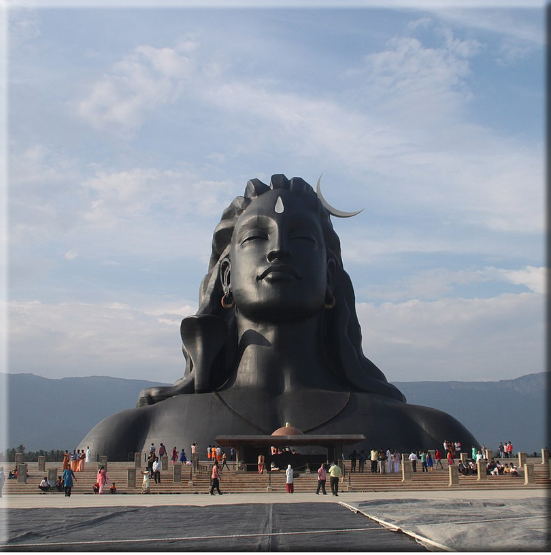
The ritual scenes and iconographic images in the video are a very striking case in point. Its focus centers on a young Kali priestess, pleading with the deity Kali with offerings of prayer and fire to aid and intercede on her behalf to free her captured lover from certain ritual death by a spurned sorcerer priest. For centuries, Kali, Shiva, Krishna etc., have been depicted in popular iconography as either "European" or "blue" hued gods/goddesses. However, the historical evidence reveals that the aboriginal "Indians" who inhabited the Indus Valley Region of Northern India were African (Cushites/Ethiopian/Dravidian).
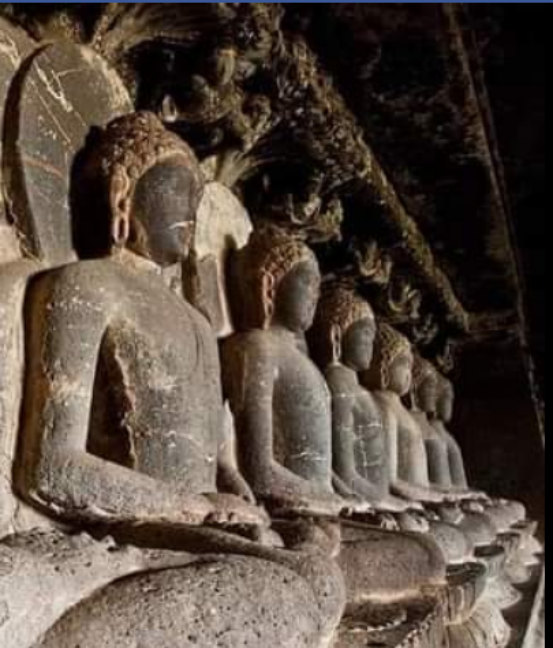
Shandra "Chandraichara" or the Akan name Kumara ("Mountain of the Moon Mother") is the "Son of Shiva". Found in what historians claim are the "oldest Buddhist caves in the world," and predates Siddartha Buddhism, Judaism, Hinduism and Christianity.
According to Tamil scholar, historian, philosopher and social commentator K.T. Rajasingham, the Cushitic, Indo-Africans, ("Indians") whom would later be known as the "Elamites/Tamuls/Tamil” were pastoral herding clans who lived near Lake Triton, (Trinton) in Southern Libya until it dried up around 1250 B.C.E. Further, the Jarawas are an ancient fishing-hunting clan who currently reside in the Indian rain forests on the Andaman & Nicobar Islands, an archipelago of some 572 emerald islands. These woolly-haired, dark skinned Jarawas are considered one of the oldest aboriginal groups and descendants of the original Indian clans of India.
Additionally, Higgins tells us:
No person who has considered the character of the temples in India and Egypt , can help being convinced of the identity of their . . . being the production of the same race of people . . . Ethiopian.
Ibid. (Vol. I. p. 311).
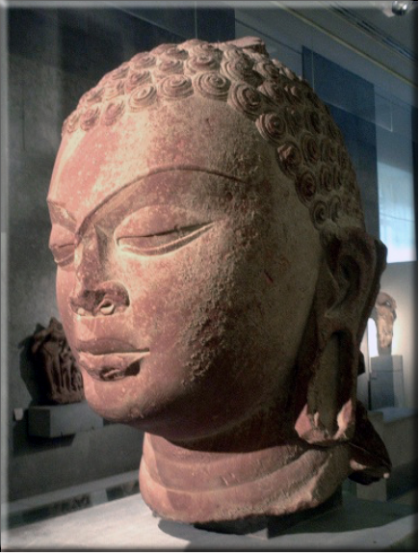
According to Rajasingham, one part of these groups remained in Babylon (now southwest Iran),while the others continued to migrate from the Euphrates and Tigris river basin area (about 900 B.C.E.), some settling in the Ural mountains of Northern India . It is in the caves of these mountains where one finds huge "Negroid" carvings of the first incarnation of Buddha: ("Buddha" meaning Wisdom ), the logos to tame the masculine, with the Sun in Taurus. Siddhartha's (Buddha) followers first taught that he was born from the womb of Maha-Maya (Mami).
The Brahmins later changed this to "immaculate conception." Few are aware that there were ten (some say fourteen) incarnations of Buddha. Only one Siddhartha Gautama is portrayed in the West, credited with being the "founder of Buddhism."
Unfortunately for generations, historians when attempting to explain the presence of Christian, Hindu or Buddhist elements (i.e., art, iconography, customs) utilized in the Mami Wata Vodoun tradition, tend to immediately credit its presence to either the African devotee's assimilating, copying or mimicking the aforementioned spiritual cultures. It appears to have never occurred to them that these "foreign" elements might indeed have originated from a more remote period in the Africans' 10,000+ years of migrational cultural history` that others have borrowed from in which the Africans recognize and are now reclaiming.
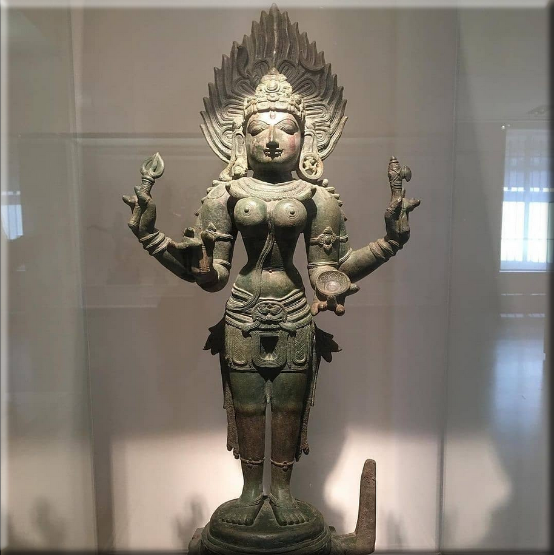
Lastly, we have Kali. In the West, she is clearly revered as a "Hindu" goddess, and is often misunderstood in her "destroyer" aspect. However, a more ancient, original Tamil image of Kali (meaning "Black"). made of bronze, from the Nadu State , clearly depicts her as African with knotted hair just as the more ancient images of Buddha. Before she was known as "Kali" she was called "Ma" (Mama), Mami, Mammitu , the "Creatress," and spirit that maintained the matrilineal lines. (Walker , 572).
Her worship may have originally come from the city of Kalhu in ancient Syria and carried to Malabar where she was worshiped as "Cama-Isis." Kali is nothing more than the Anath/Perserpine (serpent/mermaid), twin aspect of Isis, (Devdji/Mami) or Avedji Da of Awussa in the Mami Vodoun, in her role as "Destroyer of ego". In her African depiction, she holds the hanging noose or "trial by ordeal", but is usually portrayed with four hands which contains her implements of destruction, a protruding tongue, wearing a garland ornamented with skulls and severed hands. She is often smeared in red camwood/blood, and is seen typically dancing on the lifeless body of Shiva.
It is important that an African historical context is offered and considered in light of the above history, while viewing this video. It is especially useful in order to understand the ritual aspects and esoteric imagery in the film. The image of Kali resembles typical images of many Vodoun deities - even Legba or Eshu- as it is made by some priestesses and priests. And of course, the use of red camwood is all pervasive throughout many parts of Africa as being symbolic of "ritual blood".
A re-examination of the revisionists' notion that African spiritual culture, ritual, philosophy, theology and customs have had no impact on world religions, and are confined to rudimentary "tribal" developments of "animism and primitivism," lacking any level of spiritual "sophistication" is necessary. Just as Africans in the New World hid their deities behind Christian symbolism, embracing each new wave of immigrants who freely blended with them. They too joined with the indigenous populations in borrowing and assimilating African spiritual systems, infusing their own unique ethnic and cultural flavor, fully aware that beneath these foreign veils, these powerful living spiritual systems remain completely African. It is time that African spiritual contributions to the influence and development of world religions be given its due credit . They are as multi-dimensional, cosmologically complex and culturally relevant as any "mainstream" faith. And without them, these most cherished religious systems might not even exist.