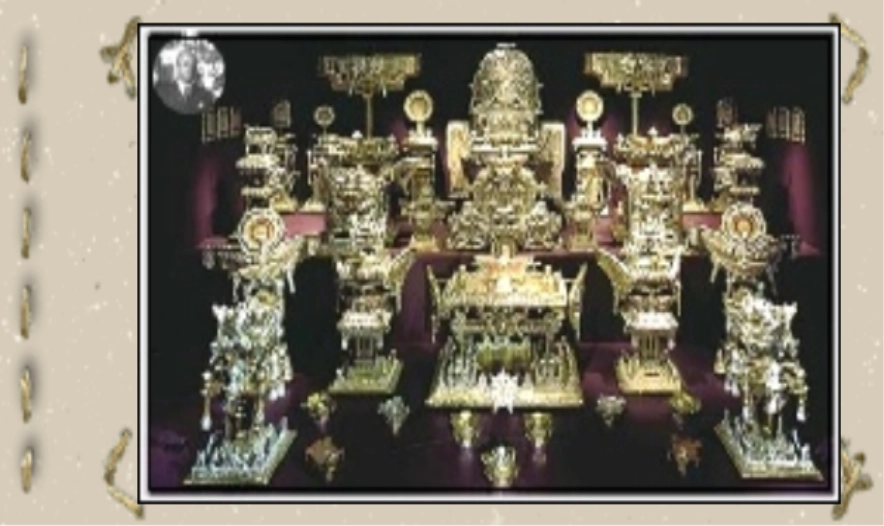
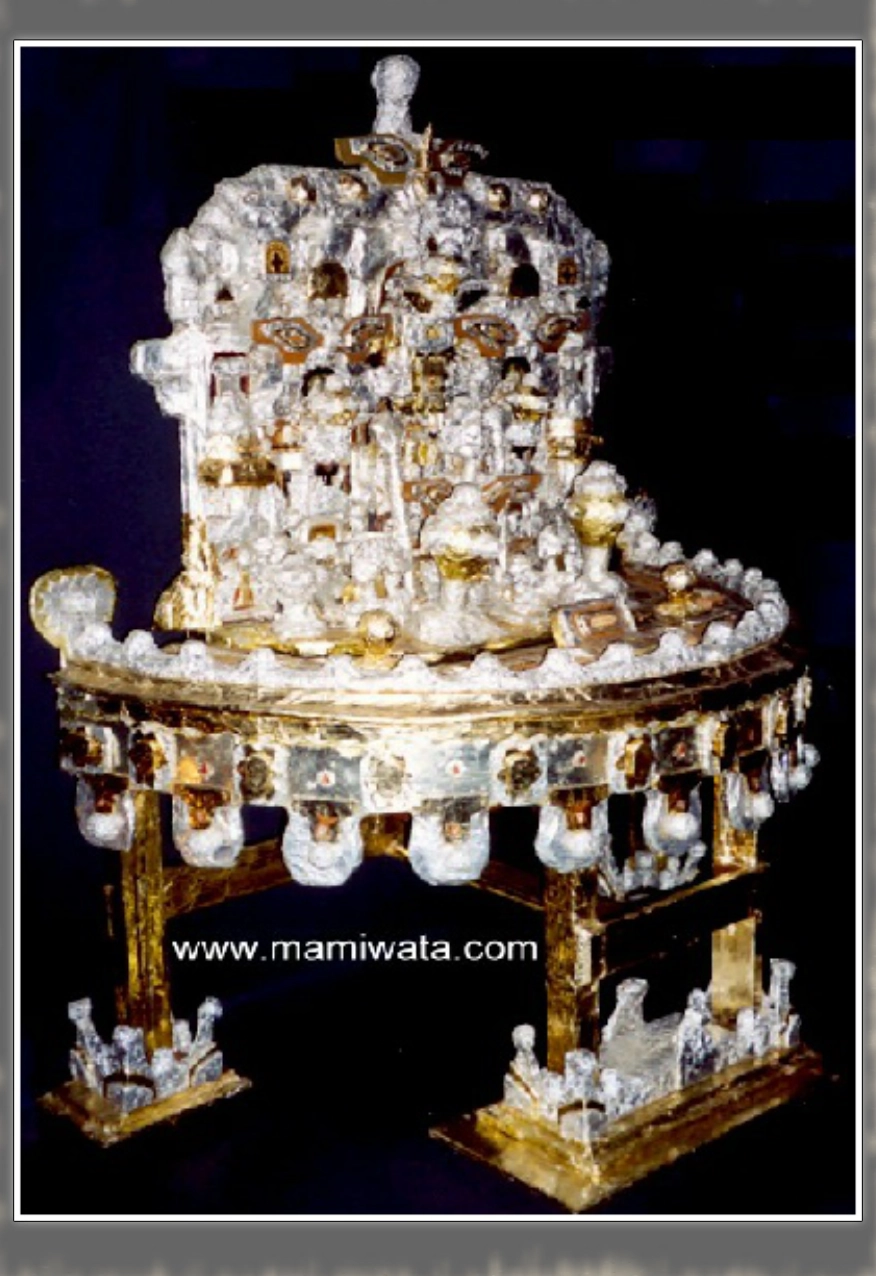
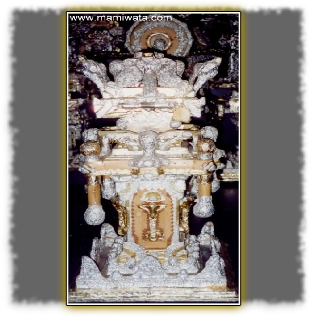
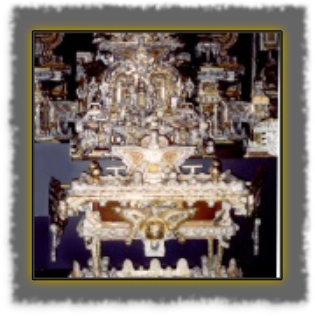
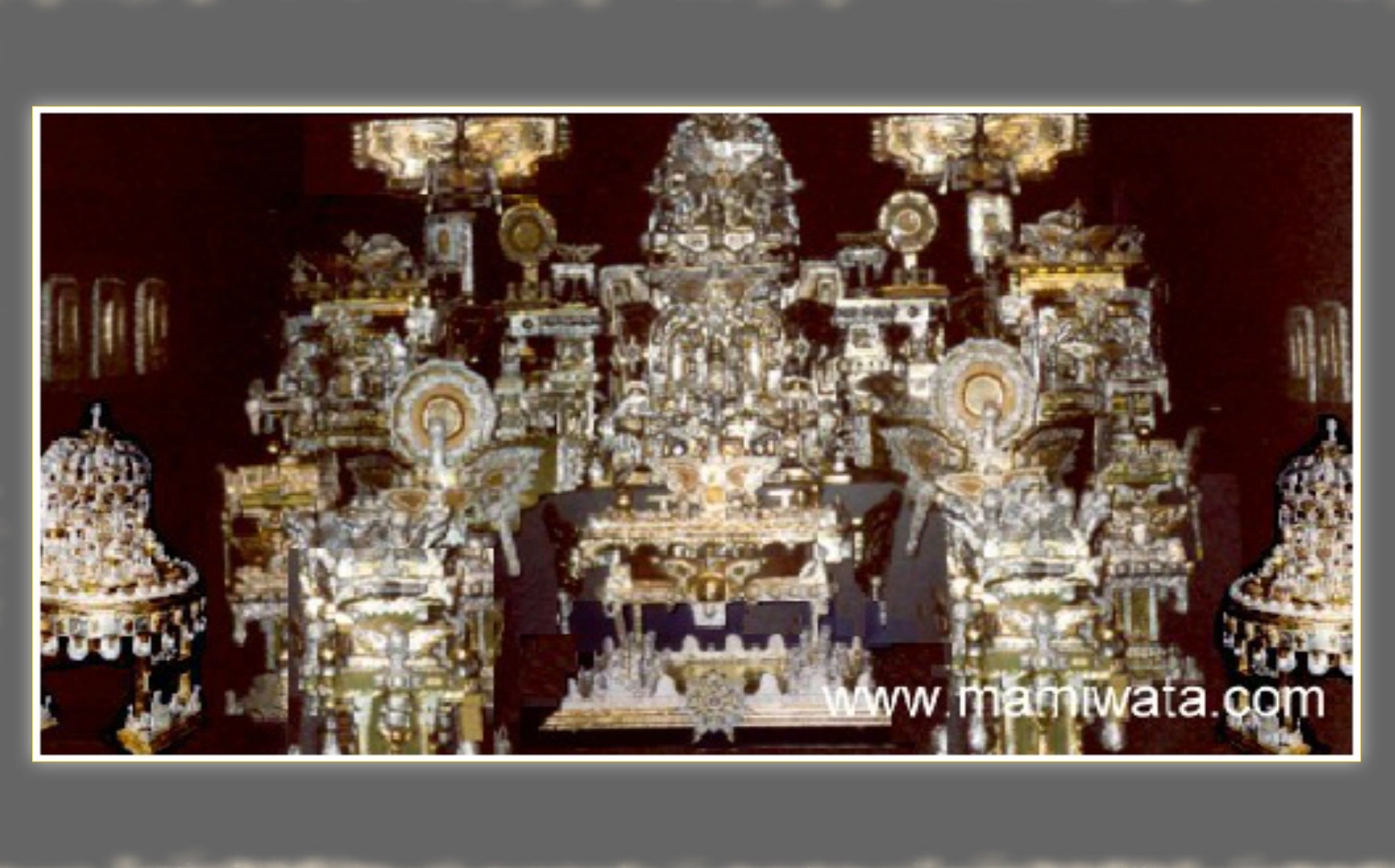
James Hampton (1909–1964) was an African-American janitor who spent nearly all of his spare time creating, in the garage of a rented house, an incredible series of spiritually inspired “holy temples”, which he labeled “Throne of the Third Millennium.” He did this by using scraps of paper, bottles and other discarded items he covered in aluminum foil.
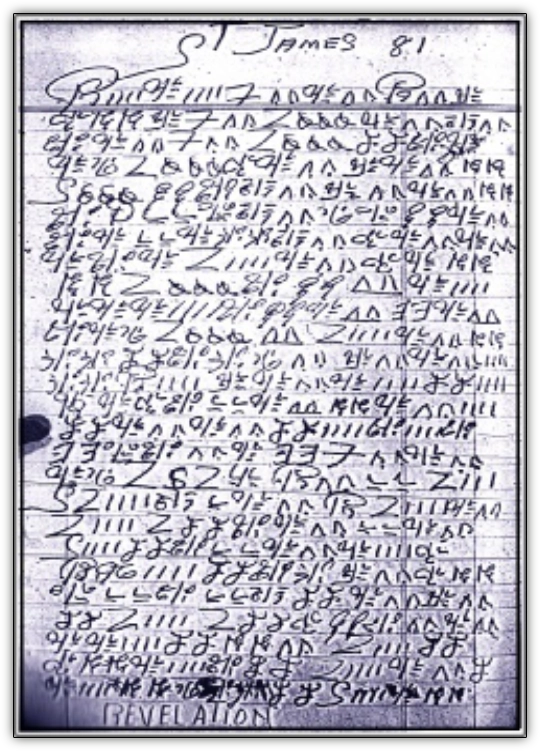
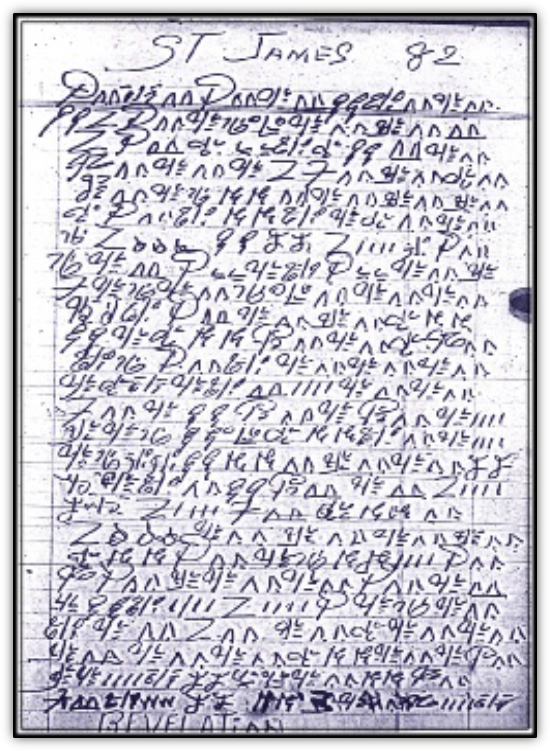
In his writings, he refers to himself as “St. James,” and believed himself to be guided by God to build his magnificent temples. Hampton recorded what he labeled “divine dispensations,” in secret cryptic code on what appears to have been the beginnings of a new holy book or the fulfillment of the prophecy of St. James.
Hampton may have believed himself to have been the actual incarnation of the biblical St. James. In his writings he refers to himself as such, along with referencing other biblical figures that he believed to have reincarnated in modern times.
For example, in one of his handwritten notes, Hampton writes that:
“This is true that Adam the First Man of God created appeared in person on January 20 1949. This was on the day of President Truman’s inauguration.” -St. James, Nov 4.
“It was not until Hampton’s death in 1964, when the homeowners cleaning out his belongings, shockingly discovered his spiritual masterpiece filling the entire garage.
Hampton’s work was soon donated anonymously to the Smithsonian Institute. In 2001, Hampton’s work received a limited exhibition at the college of William & Mary in Williamsburg, Virginia. James Hampton’s work and his mystery writings are seriously underexposed and remains one of the most interesting spiritually inspired works of art in American history.

Dispensation of the Temple of the Virgin Mary
In the absence of Hampton’s African ancestral spiritual culture and theology, Christianity was the only means by which he was able to express its proximity through his art.
His temple structures resemble those (as described by Edward Faulkner), in his description of the temples to the Black Dianna (Artemis), of whom the Christian “Virgin Mary” was created.
Hampton perhaps, also had no idea that men such as him were often initiated and commissioned to construct the new altars of the Black Dianna.
These artists worked in absolute secrecy and privacy until her veiled image was completed. After its completion, she would “bless them” by taking their lives to assume a divine position in the underworld next to Her.
Hampton’s “triple tiered throne” is a major theme throughout many of the iconography of the original African Artemis, as she wears the triple crown” symbolizing her creation of and union of her “son, holy spirit, and Self”, and her rulership of the three major kingdoms (Kemet,Peloponnesia, India)
“The Throne”
Turn of the century anthropologists (Miles, Newbell, A.B. Ellis et al. ) and cultural ministers (Hyatt) some working for the Federal Writer’s Project, in studying the spiritual and religious folk culture of previously enslaved Africans throughout the South, came to the conclusion that their religious practices were a form of “Hebrewism.”
This “Hebrewism” eventually was exchanged to mean the Vodou, and was summarily demonized in American culture. However, Hampton’s spiritual and cultural memory, clearly demonstrates the cosmogenetic and ancestral link to the period when the great temple of the African “Beth” (origins of Bethlehem) was the major center of worship for the Hebrews, and where their “savior kings” were customarily born and crowned by Her.
“Throne of the Third Heaven”
Hampton's visionary and creative use of the holy triad i.e., “triple crown”, “triple throne,” “third heaven” all refer to the period of the Great African Goddess whose devotees first employed Her mysteries through ritual art.
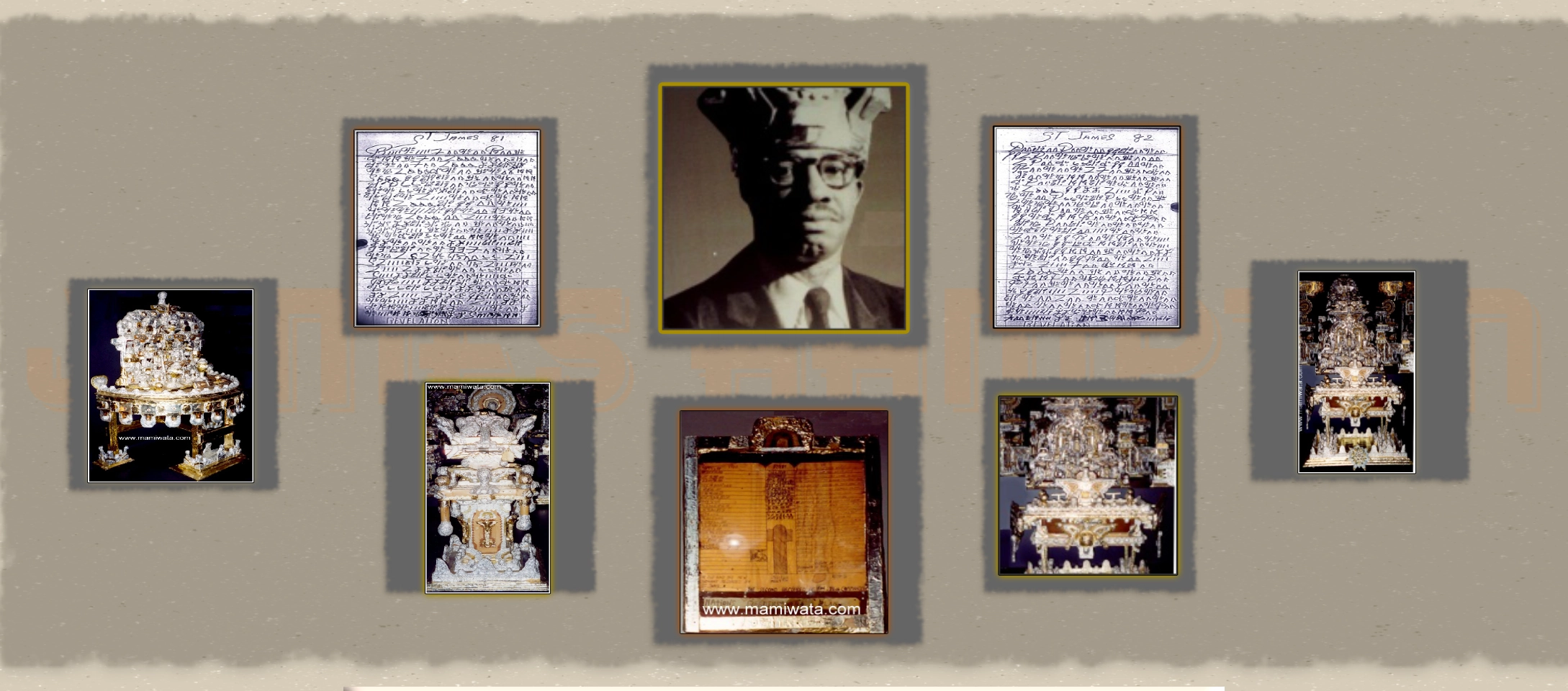
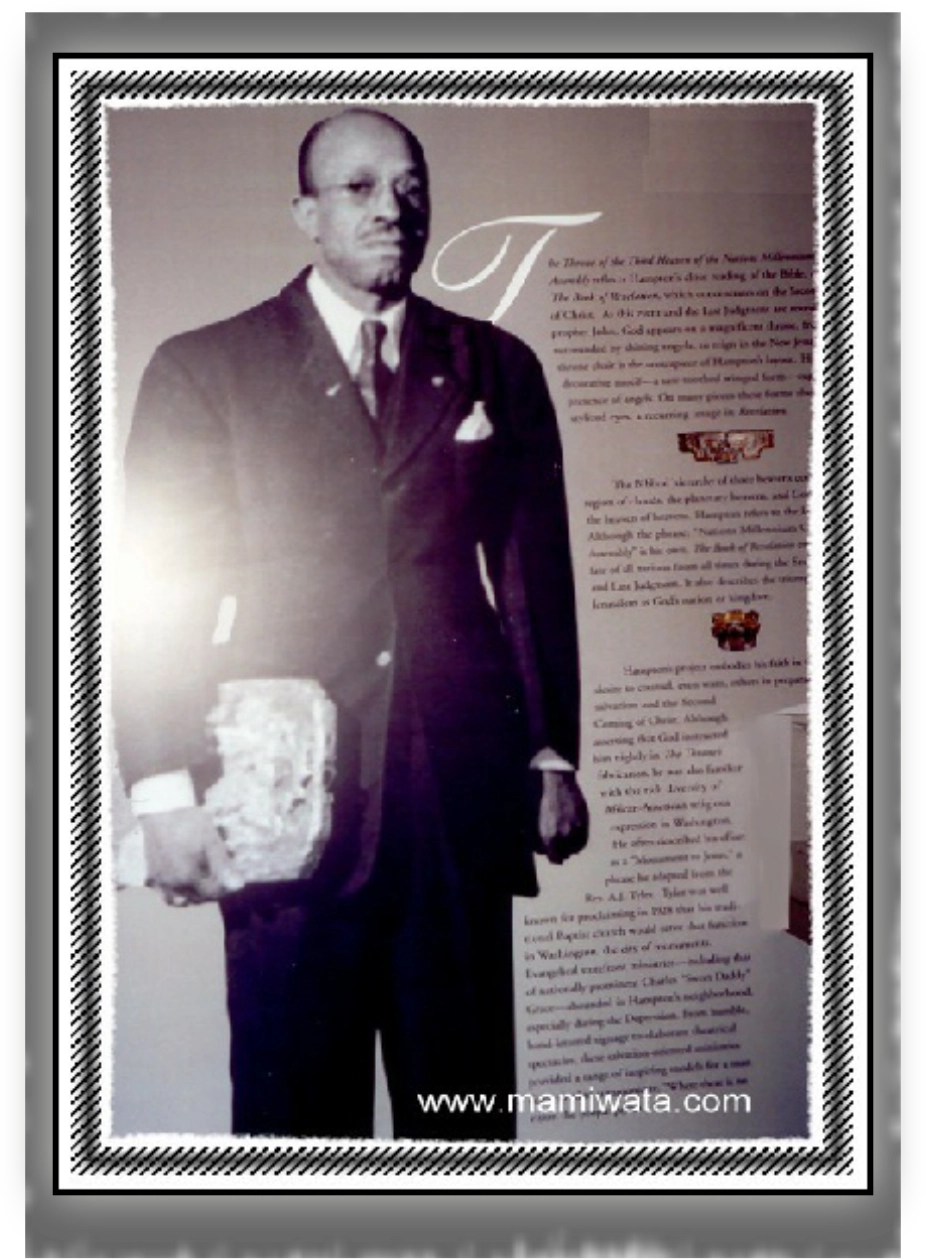
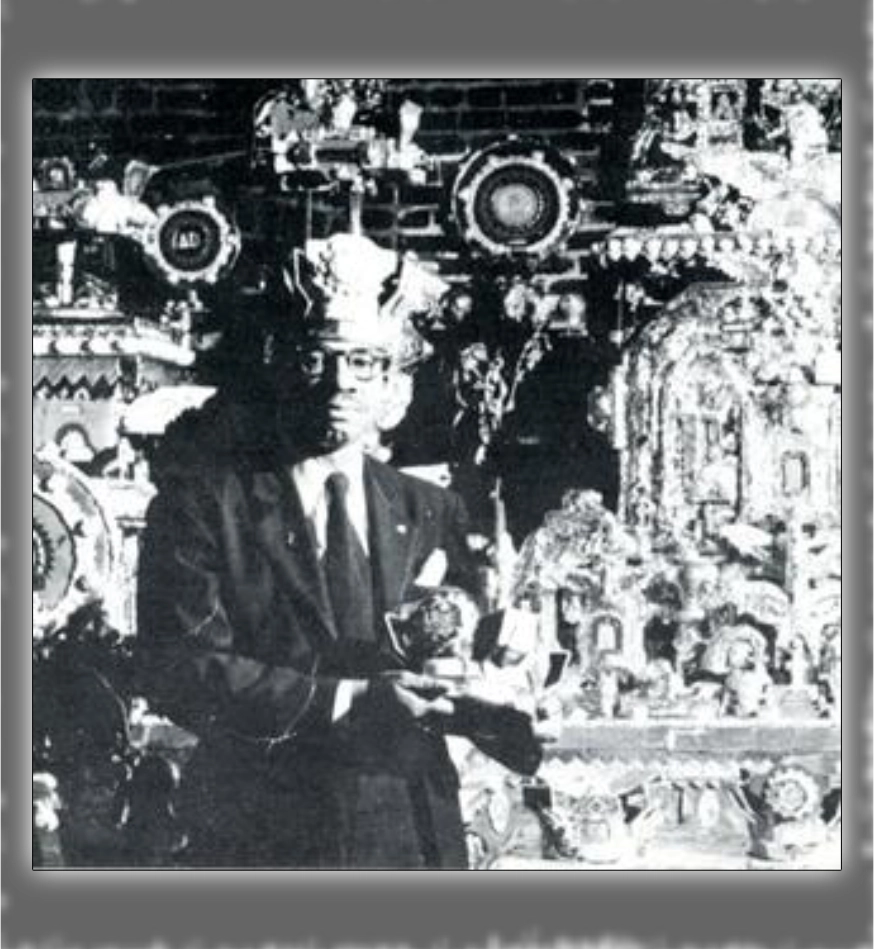
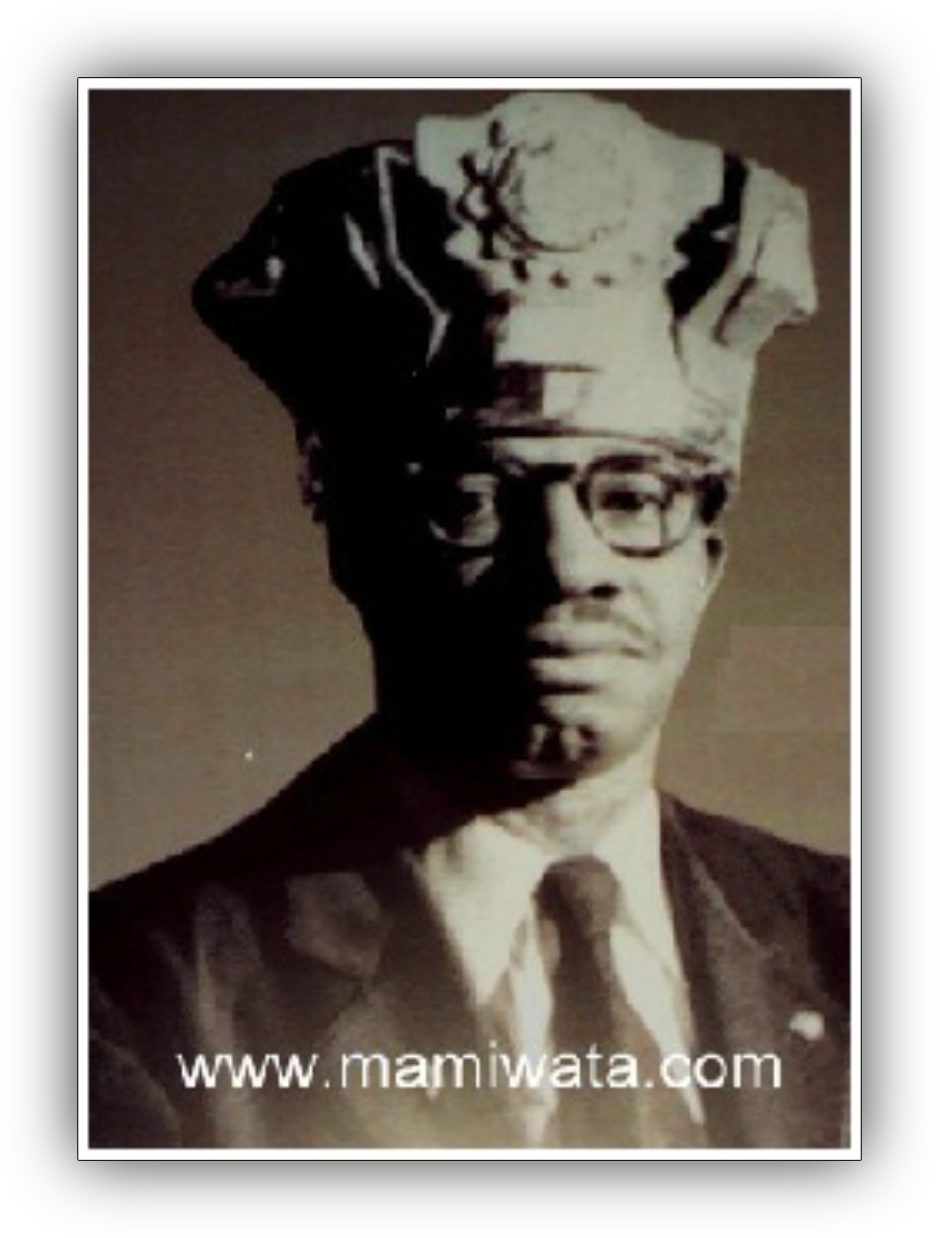
James Hampton wearing the “holy crown” which he designed.
James Hampton wearing the “holy crown”
As previously mentioned, Hampton had also identified himself with the Christian evangelist “James,” later to be canonized as “St. James.” James was proclaimed to be the “brother” of “Jesus.” He lived approximately 45 years after his alleged “crucifixion.”
During the time that James was alive and proselytizing, the majority of the world still continued in their own traditional worship and culture of their great ancestors and powerful deities. It was this atmosphere that created and fueled the competitive drive by the Roman elite for Christianity’s invention.
James’s message, (in this respect), was merely a universal mimicking of the old established tenets of many of the indigenous faiths originating out of ancient Egypt, Peloponnesia, Babylon, Rome and elsewhere. Speaking to the newly converted Hebrews, James’s message was namely, the importance of unity, and the development of good morals in one's character.
He advocated against the corruption, discrimination, usury, prejudice, and other divisive behavior which was causing the emerging Christian church to fail in the midst of much more pervasive and established spiritual institutions.
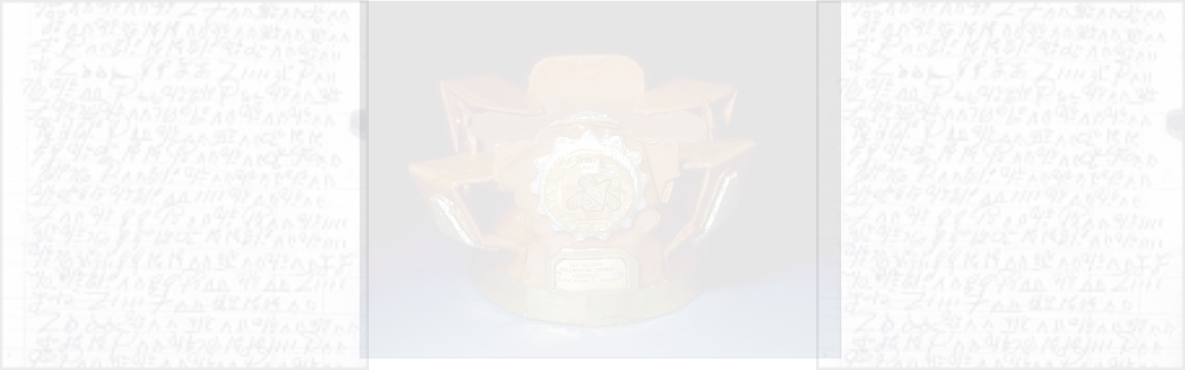
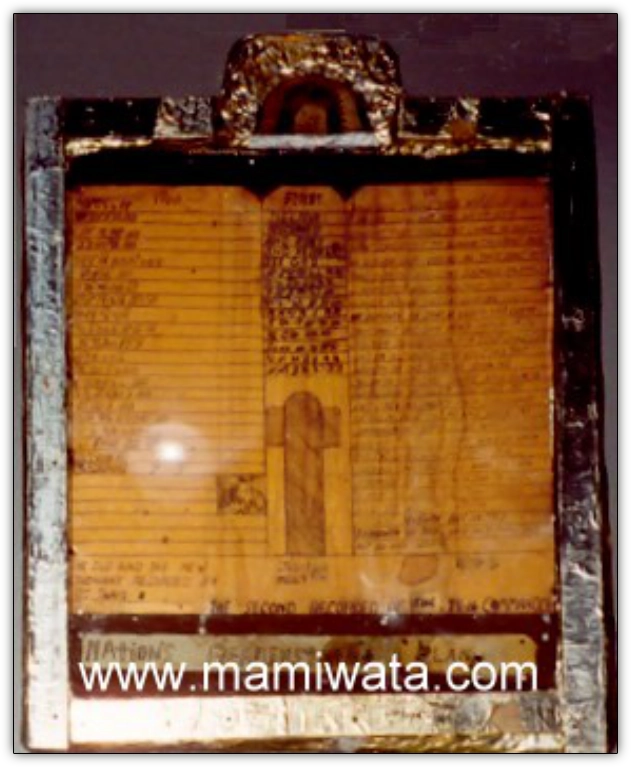
(above right) Hampton’s wooden tablet containing cryptic messages obtained from his notebook entitled “The Book of the 7 Dispensations.”
(above left) Two pages of cryptic messages obtained from Hampton’s notebook entitled “The Book of the 7 Dispensations.”
Although it contains some English words, until the present, neither it, nor has Hampton’s notebook ever been deciphered. Again, as in the times of the Black Dianna, (Artemis, Astarte (“Esther”), moral codes, specifying and reinforcing social, norms, customs and taboos were often etched on tablets made from cedar and other sacred trees.