
Translate this page:
You can translate the content of this page by selecting a language in the select box.
Share this link!
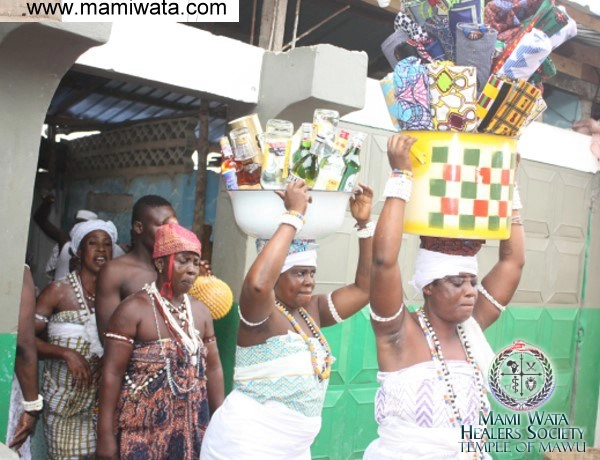
At its cosmological core, African religions are ancestral religions, in which their priesthoods. and the "ashe" (spiritual power, esoteric knowledge and authority) are passed down to them directly from their priestly ancestors.
The priesthoods in West African-Diaspora Vodoun are no different than the inherited priesthoods based on lineage and (ancestral) bloodline practiced by the ancient Levitical Jews. Yet they would not have been classified as being "Zionists, revolutionaries" etc.
An "Africentric" is typically defined as viewing the historical, social and cultural world exclusively from a philosophical, theological and ideological perspective of the African Diaspora. Most do not realize that it is normal for all groups to subconsciously view the world from their own cultural perspective. Yet many tend to negatively connote the African/Diaspora's perspective as being "anti-social, militant/revolutionary, and even exclusive (i.e., "for the African-Diaspora only). This assumption is particularly applied when it comes to African Diaspora religions whose primary evolution has been designed and centered on the African/Diaspora. The explanation of Diaspora
"Africentrism," is both theological and political in nature. "Africentric" as it is applied to African-based religions, does not necessarily imply that non-Africans are prohibited from being initiated and participating as spiritual members in any Vodoun Egbes. They all have ancestors and some are born with legitimate guardian spirits that can be assimilated (subsumed) by the Vodoun deities.
However, in the realm of the Vodoun religion of West Africa, (where all Vodoun in the Diaspora is derived), the French, Germans, Danes, and other Europeans have coveted these territories for several hundred years. Although many have expressed an interest, or have received ritual ceremony and have photographed and published some aspects of Vodoun in action, they (whites)
are virtually non-existent in these West African Egbes and are non-existent in its priesthoods.
Their absence cannot be easily explained away as due to "racism," or to the "Africentric" thinking by its members. What can then account for their absence? To answer this question, it is important to recognize the basic immutable, theological structure of African religions in order to understand
the limited role that defaults the non-Diaspora into specific levels of initiation and ritual participation. It is also important to keep in mind that the overwhelming majority of Vodoun adherents in West Africa are also not priests and play a limited role in ritual functions. Unlike Western based faiths where anyone with an urge or desire can apply for priesthood, this "limited
role" is centered on the fundamental lineage philosophy of the Vodoun religion and its subsequent spiritual dynamics. At its cosmological core they are not dogmatic or scripturally centered. African religions are ancestral religions, in which their priesthoods and the "ashe" (spiritual power, esoteric
knowledge and ritual authority) are passed down directly from their priestly ancestors on to them. Contrary to widely held misconceptions, it is not the deities (or the initiating priests), but the priestly ancestors of an individual's lineage who bestows this authority. Priestly authority in the West African-Diaspora Vodoun religion stems from the special relationship that the Africans have had with the God/dess their ancestors and their lineage deities dating back thousands of years. In
other words, contrary to the western fad practiced in many of the African-based traditions today of bestowing "priesthood" on to themselves and to others, the priesthoods in the Vodoun religion are not ceremonially "made", but are still bio-spiritually inherited. It is no different than the inherited
priesthoods based on lineage and (ancestral) bloodline practiced by the ancient Levitical Jews. Yet they would not have been classified as being "Zionists, revolutionaries" etc. African religions pre-date Judaism, and there is compelling evidence that the Jews derived their lineage beliefs directly from African indigenous (esp. Kemetic) religions (see: Mami Wata: Africa's Ancient God/dess Unveiled).
The Egbes (spirit houses) in West Africa today, are dominated by the many ethnic groups who have ancestral, priestly, and bio-spiritual relationships within these respective groups, and with its tutelary deities. It is natural that they would consists of an all African congregant. This is also the case in the West African derived Egbes that are being resurrected in America and elsewhere in the Diaspora. In time, some of these Egbes whose focus is
specifically on the deities, may perhaps be the first integrated in this manner. However, there will also exist simultaneously Egbes that will remain predominately or even exclusively African Diaspora. These tend to be the Egbes where the lineage Ancestors, who have always wielded more authority
than the deities, are dominant as it has always been in West Africa. The political dynamics come into play in the case of North America,where these Egbes will naturally reflect the historical and cultural dynamics oftheir African ancestral experiences.
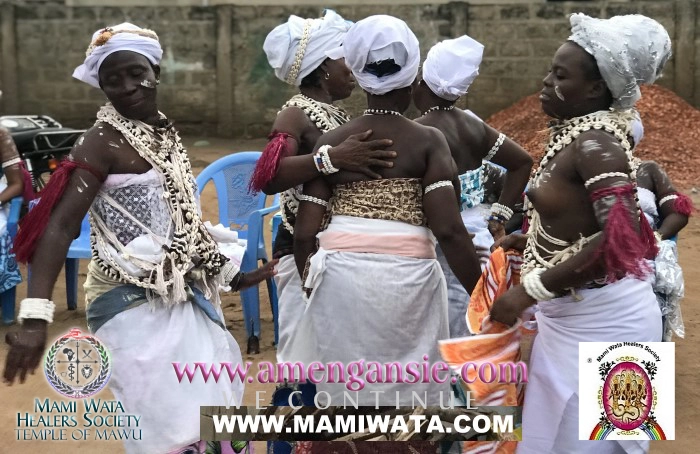
Priestly authority in the West African Diaspora Vodoun religion stems from the special relationship that the Africans have had with the
God/dess their ancestors and their lineage deities dating back thousands of years.
For example, there are literally millions of Africans who were enslaved and did not receive proper burial rights, or were brutalized by slave masters, robbed of their cultural and intellectual properties and material wealth. These ancestors have watched in the world of spirit the enormous wealth generated from their labor, yet are witnessing the disintegration of their disconnected families and their social and economic struggles, while those responsible for their enslavement benefit and pass inheritance on to their own children. These African ancestors have also witnessed new waves of immigrants who are benefiting from the economic wealth first established by their labor. These ancestors are still very angry, yet many are still willing to extend themselves to those offending groups, but they themselves must first be appeased and their own children taken care of. Most (especially Whites) are unwilling to take on this very real restitutional responsibility. To view this spiritual obligation as a burden rather than a blessing reveals their lack of understanding of African spiritual philosophy and its very real presence in the world of those who are ancestrally linked to the ancient deities, and the very real presence of their ancestral spirits in their lives. Any attempts to bypass this history will ultimately lead to disappointment and resentment of those who are blessed by honoring it, for it is the ancestors who wield the real power in the world of Vodoun.
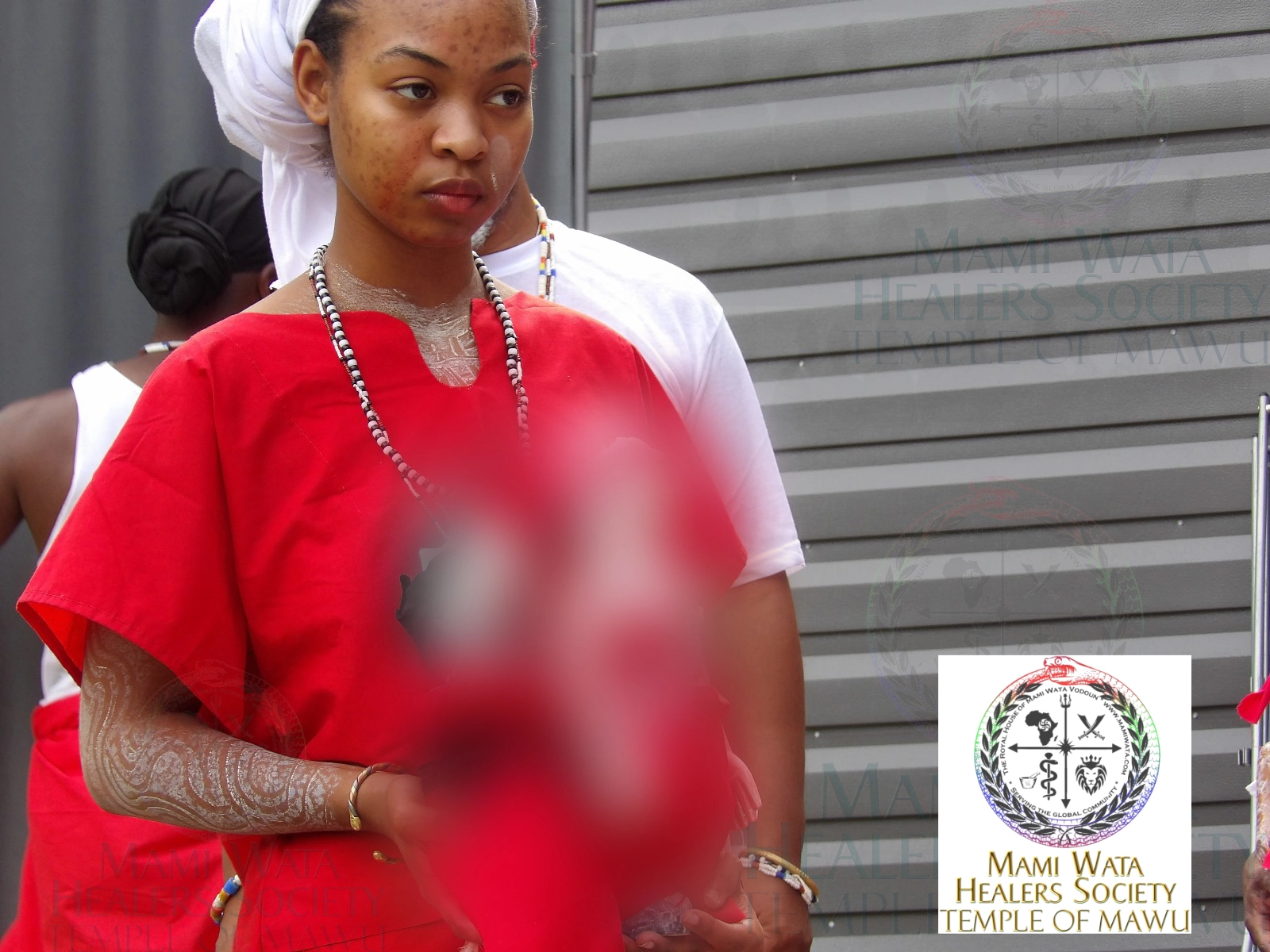
These ancestors are still very angry, yet many are still willing to extend themselves to those offending groups, but they themselves must first be appeased and their own children taken care of.
Most (especially Whites) are unwilling to take on
this very real restitutional responsibility.
It is actually in the "all Black" Egbes where the non-Diaspora should participate. In becoming part of Egbes in which ancestral healing is taking
place, they and their ancestors can indeed benefit from this powerful process if they are able to withstand and handle the psycho emotional complexity of the African-American experience. Unfortunately, many tend to reflect the
attitudes and the prejudices of the greater society, and express an interest in simply "owning the Vodou deities" for their own benefaction, which they soon learn they can never possess. Herein is where the problems lie with the African ancestors, and the resentment felt by their descendants which is often wrongly interpreted as "anti-white" or "Africentric thinking".
Until the nation is ready to come to terms with its history, "all Black"
Egbes will by default, exist where these ancestors and their descendants will have a spiritual means to emote, spiritually commune to heal and community build. This survival mechanism is thousands of years old, and should be
celebrated in a culture which has repeatedly proclaimed to be "tired of the enslavement and oppression issue," and have demonstrated no intentions of providing a tangible means in which to honor and integrate these ancestors
into mainstream society. Many ancestors are also leading their kin to "all Black" Egbes to escape
these oppressive attitudes and political forces until the descendants and benefactors of slavery realize the profound meaning and power there is in
their willingness to make atonement and to heal this troubling aspect of history as a collective group. The proliferation of Africentric Egbes in response to America's collective apathy will require patience and understanding, as
opposed to judgment, stereotyping, and mislabeling. When one is truly respectful of the religions of others, one must first
demonstrate this by understanding its historical, cultural, political and bio-spiritual nature based on the divine principles and ethics embodied in its
people. To do otherwise will only lead to more misunderstanding, conflict, and confusion between the various groups.